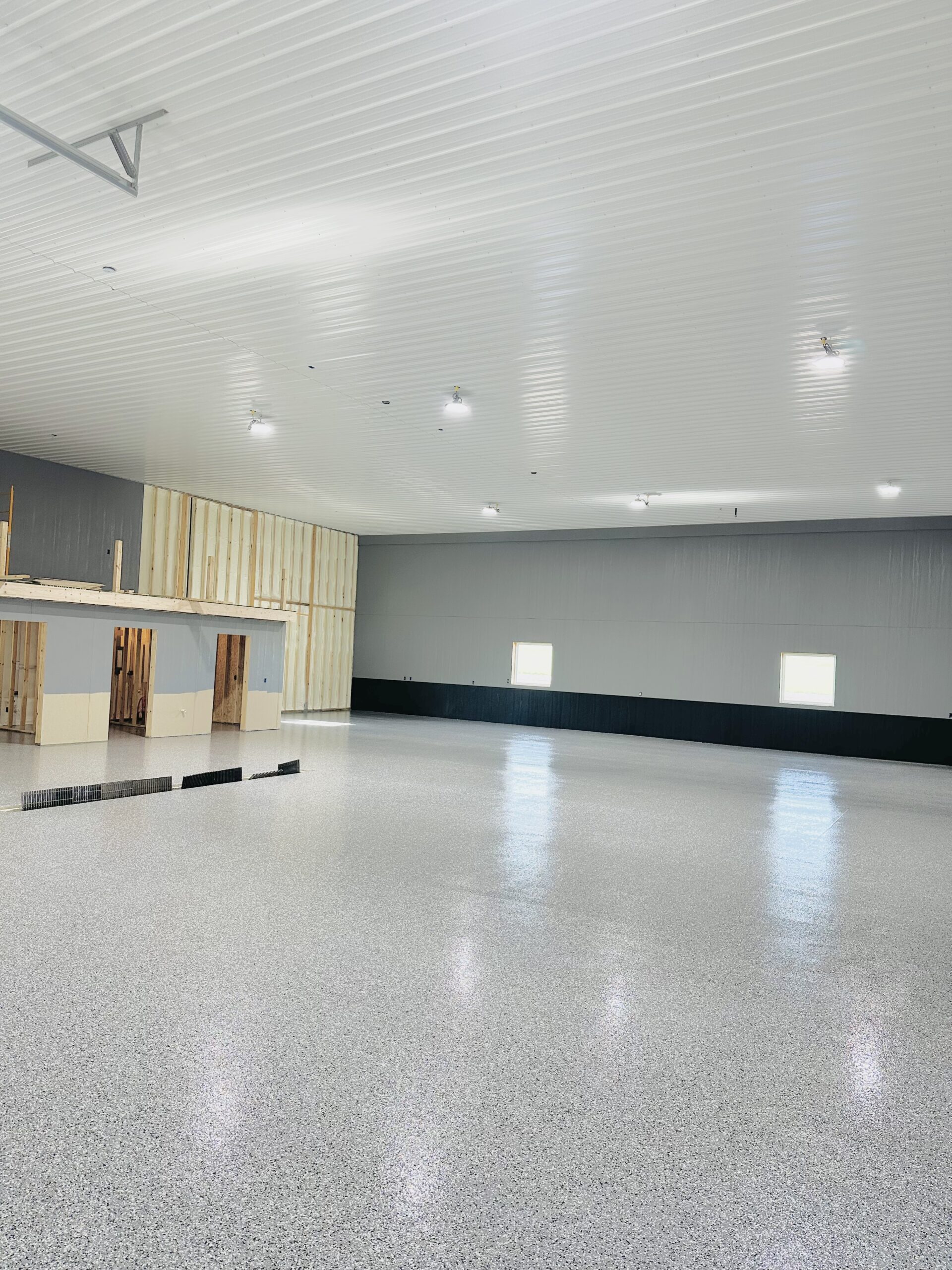
Not All Floor Coatings Are Created Equal
Facility managers, plant engineers, and architects frequently face a fundamental question: which floor coating chemistry is right for this application? The three most common high-performance options — epoxy, urethane (including urethane mortar), and polyaspartic — each deliver different performance profiles optimized for different environments. Choosing wrong results in premature failure. Choosing right delivers a decade or more of maintenance-free performance.
Epoxy Floor Coatings
Chemistry
Two-component systems: epoxy resin (bisphenol A, bisphenol F, or novolac) + amine or polyamide hardener. 100% solids formulations are standard for industrial applications.
Strengths
- Highest compressive strength (10,000-12,000 PSI in broadcast systems)
- Excellent chemical resistance (novolac formulations resist strong acids and solvents)
- Wide range of thickness options (10 mils to 125 mils self-leveling)
- Cost-effective on a per-square-foot basis
- Excellent adhesion to properly prepared concrete
Limitations
- UV sensitive — yellows and ambers with sunlight exposure
- Rigid — does not accommodate significant substrate movement
- Slow cure — 24-72 hours before return to service
- Temperature sensitive during application (50°F-90°F)
- Not thermal shock resistant (fails in food processing environments)
Best For
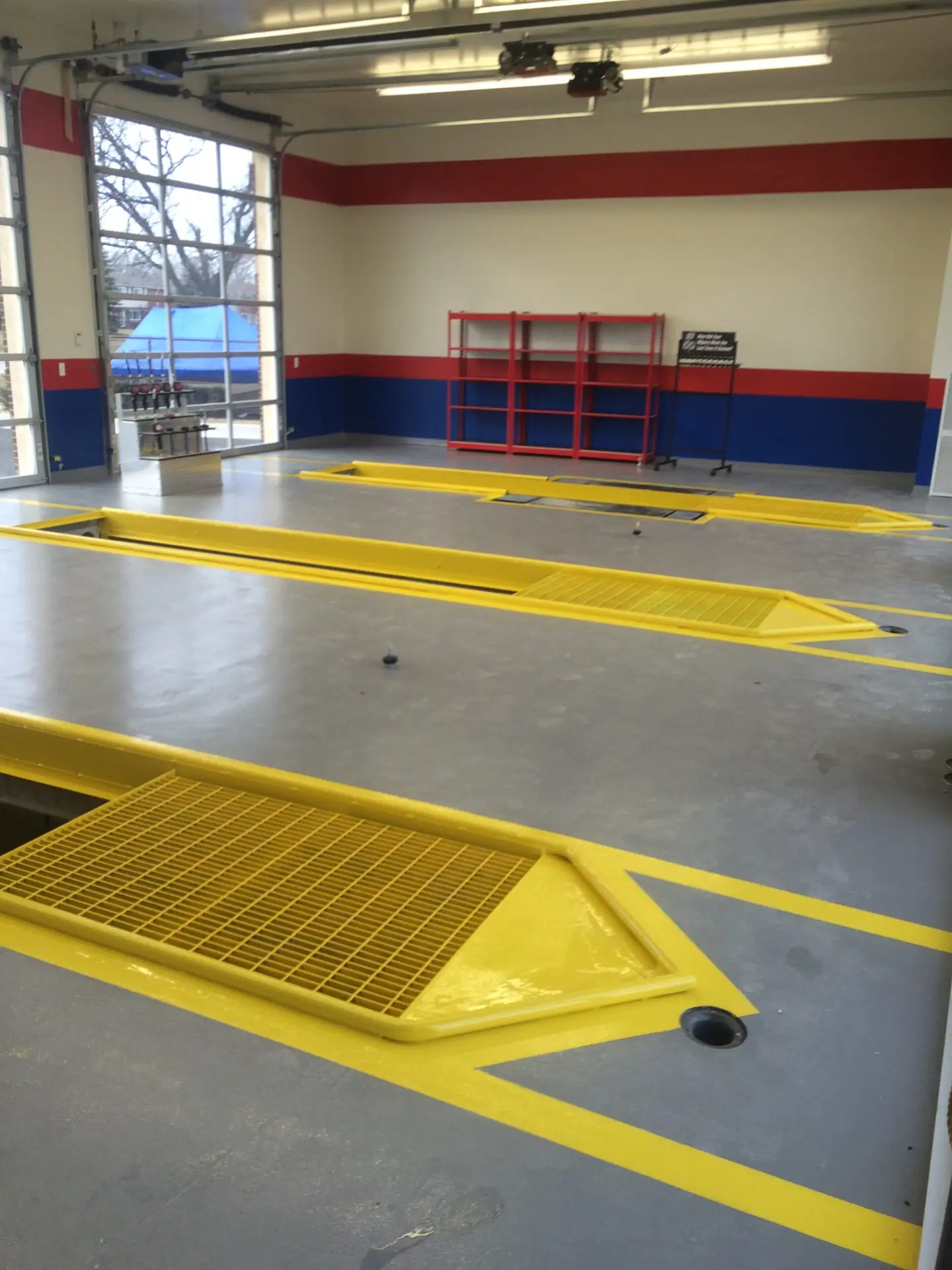
Warehouses, manufacturing, automotive service, garages, hangars, chemical storage, battery rooms
Urethane and Urethane Mortar Systems
Chemistry
Polyurethane or cementitious urethane systems. Urethane mortar (MavCrete UM) combines cementitious aggregate with polyurethane binder for extreme performance.
Strengths
- Thermal shock resistant (-40°F to 250°F)
- USDA/HACCP compliant for food processing
- Moisture tolerant application (up to 99% RH)
- Integral slope-to-drain capability
- 15-20 year service life in food/beverage environments
Limitations
- Higher cost per square foot than epoxy
- Requires experienced installation crews
- Thicker application (3/16″ to 1/4″) requires more material
- Limited decorative options compared to epoxy
Best For
Food processing, breweries, commercial kitchens, pharmaceutical, dairy, meat processing, any environment with thermal shock or steam cleaning
Polyaspartic Coatings
Chemistry
Aliphatic polyurea formed by reacting aliphatic polyisocyanate with polyaspartic ester. A specialty subset of polyurea technology.
Strengths
- Fastest cure of any high-performance coating (walk-on in 2-4 hours)
- UV stable — no yellowing or ambering
- Wide temperature application range (25°F to 100°F)
- Excellent gloss and clarity for decorative applications
- Good chemical and abrasion resistance
Limitations
- Short pot life (15-30 minutes) demands experienced crews
- Not suitable for thick-build applications
- Higher material cost than standard epoxy
- Less chemical resistance than novolac epoxy
- Cannot match thermal performance of urethane mortar
Best For
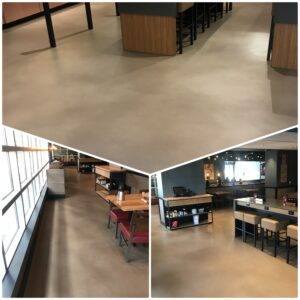
Topcoats over epoxy, commercial spaces with UV exposure, fast-turnaround installations, decorative systems, retail and hospitality
System Selection Guide
The right answer is almost never a single chemistry. Most high-performance floor systems combine two or more chemistries in a layered approach: epoxy primer for adhesion, epoxy body coat for thickness and chemical resistance, and polyaspartic topcoat for UV stability and rapid cure. The best system for your facility depends on chemical exposure, thermal conditions, traffic profile, aesthetic requirements, and installation timeline.
Contact Maverick Performance Solutions — we will evaluate your facility conditions and recommend the right system for your specific application.