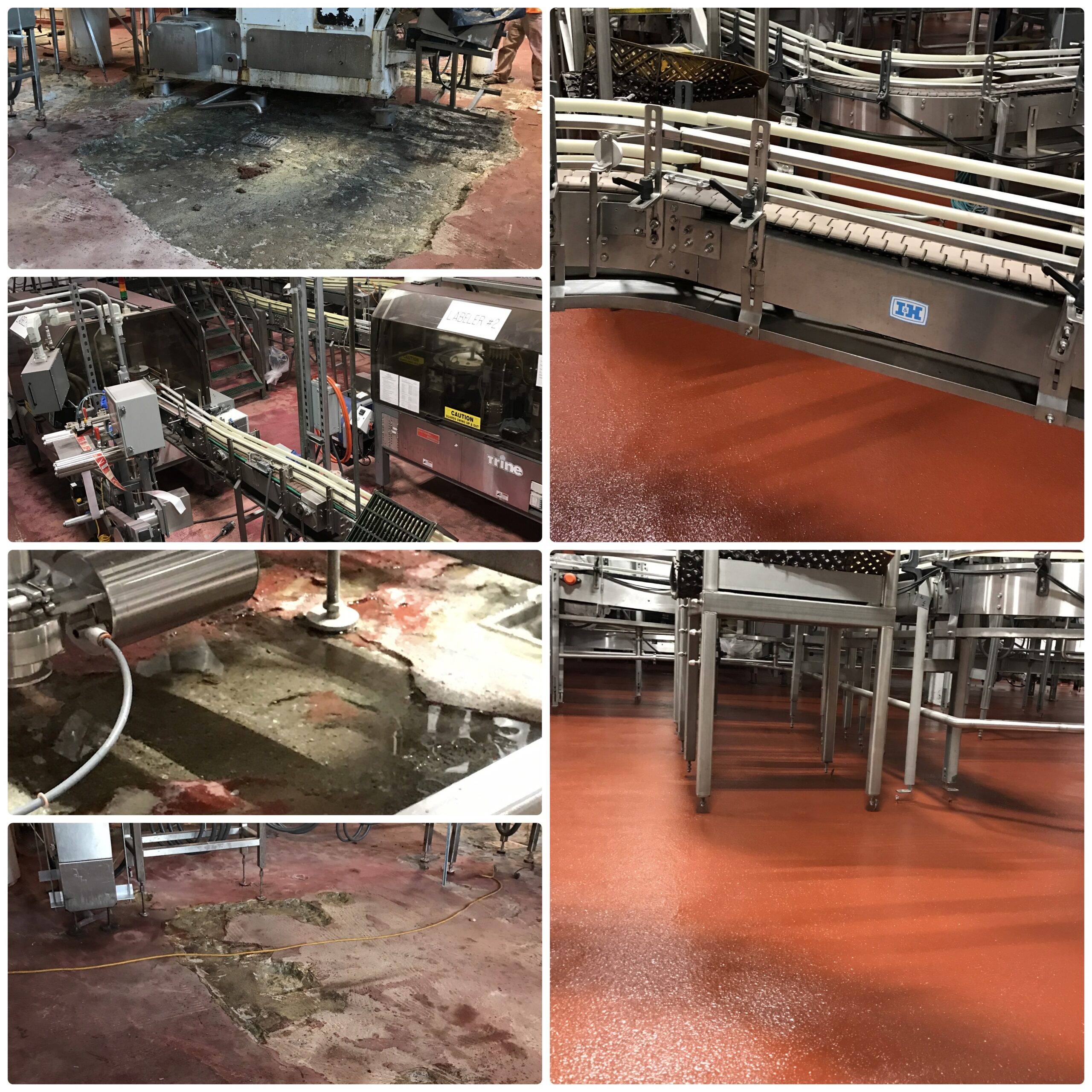
Brewery Floors Are Wet, Hot, Cold, Acidic, and Under Constant Assault
The brewing and distilling environment creates a chemical and physical challenge profile that eliminates most standard flooring systems within 18-24 months. Brewhouse floors see water temperatures exceeding 200°F during CIP cycles, followed by cold-water rinses. Fermentation areas deal with lactic acid, acetic acid, and caustic cleaning agents. Packaging lines have constant water, broken glass, and forklift traffic. And every surface must meet FDA food safety requirements and TTB (Alcohol and Tobacco Tax and Trade Bureau) facility standards.
Maverick Performance Solutions has installed flooring systems in craft breweries, regional breweries, and distilleries across the United States. Here is what the specification process requires.
The Chemical Challenge
Brewery environments expose flooring to a specific chemical profile that must be verified against the coating manufacturer’s resistance chart:
- Lactic acid (up to 5%): Produced during fermentation — attacks standard epoxy within weeks
- Acetic acid (up to 5%): Present in wild fermentation and cleaning processes
- Phosphoric acid (2-5%): Common CIP cleaning agent
- Caustic soda / NaOH (2-5%): Primary CIP cleaning agent for tanks and lines
- Peracetic acid: Sanitizer used in packaging and kegging areas
- Ethanol and isopropyl alcohol: Spillage from distillation and cleaning
Urethane mortar (MavCrete UM) resists all of these chemicals at typical brewery concentrations. Standard epoxy systems fail against lactic acid and caustic soda — which is why epoxy-only brewery floors fail within 2-3 years.
Thermal Shock Resistance
CIP (Clean-in-Place) protocols in breweries cycle hot caustic (160-180°F) followed by cold water rinse (40-55°F) — a temperature differential exceeding 100°F in minutes. Standard epoxy and urethane coatings crack under this thermal cycling because they lack the flexibility and thermal tolerance to accommodate rapid expansion and contraction.
Urethane mortar systems are specifically engineered for thermal shock environments. MavCrete UM handles continuous service from -40°F to 250°F and survives rapid temperature cycling without delamination or cracking. This is why urethane mortar is the industry standard for brewhouse and cellar floors.
Drainage Design
Brewery floors must drain completely. Standing water is a contamination risk, a slip hazard, and an FDA citation trigger. Proper drainage design requires:
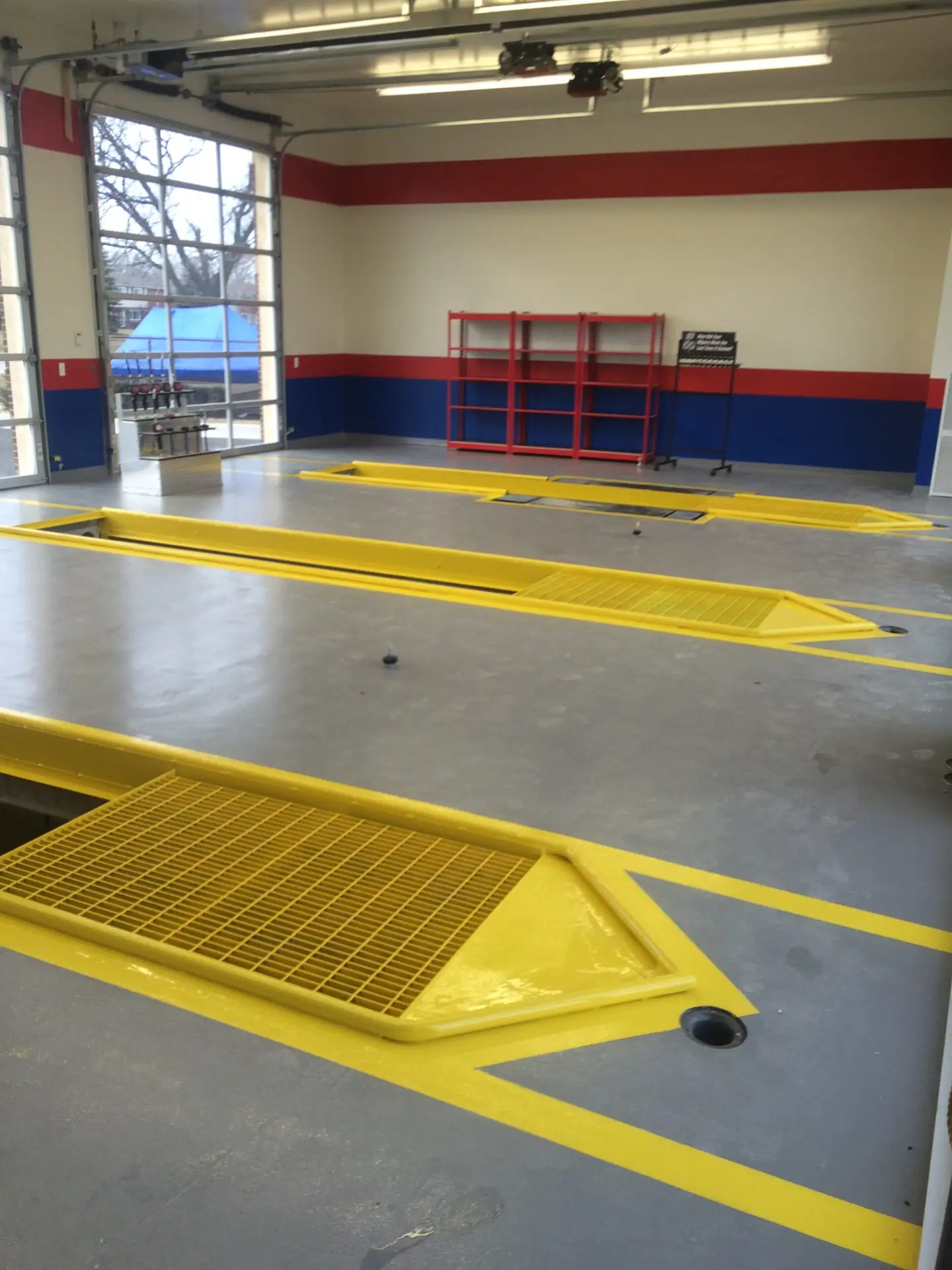
- Slope-to-drain: Minimum 1/8″ per foot (1% grade) to all floor drains — verified by laser level
- Trench drain integration: Stainless steel trench drains with compatible urethane mortar transitions
- Drain detail: Coved transition from floor to drain flange — no gaps, no crevices
- No puddle zones: Low spots identified and corrected during installation
Coved Base and Wall Transitions
FDA and SQF auditors target floor-to-wall transitions as bacterial harborage points. Flat 90-degree angles are a cleaning failure and an audit finding. Maverick installs 4″ radius coved bases as standard on all brewery projects — a seamless, curved transition from floor to wall that eliminates harborage and supports wash-down cleaning protocols.
The Maverick Brewery Floor Standard
Every brewery installation follows the same proven specification: urethane mortar body at 1/4″ minimum thickness, broadcast aggregate for slip resistance in wet areas, sealed topcoat for stain resistance, 4″ coved base at all wall transitions, slope-to-drain geometry verified by laser level, and chemical resistance documentation for the specific cleaning agents used in your facility.
Contact Maverick Performance Solutions to discuss flooring for your brewery or distillery project.