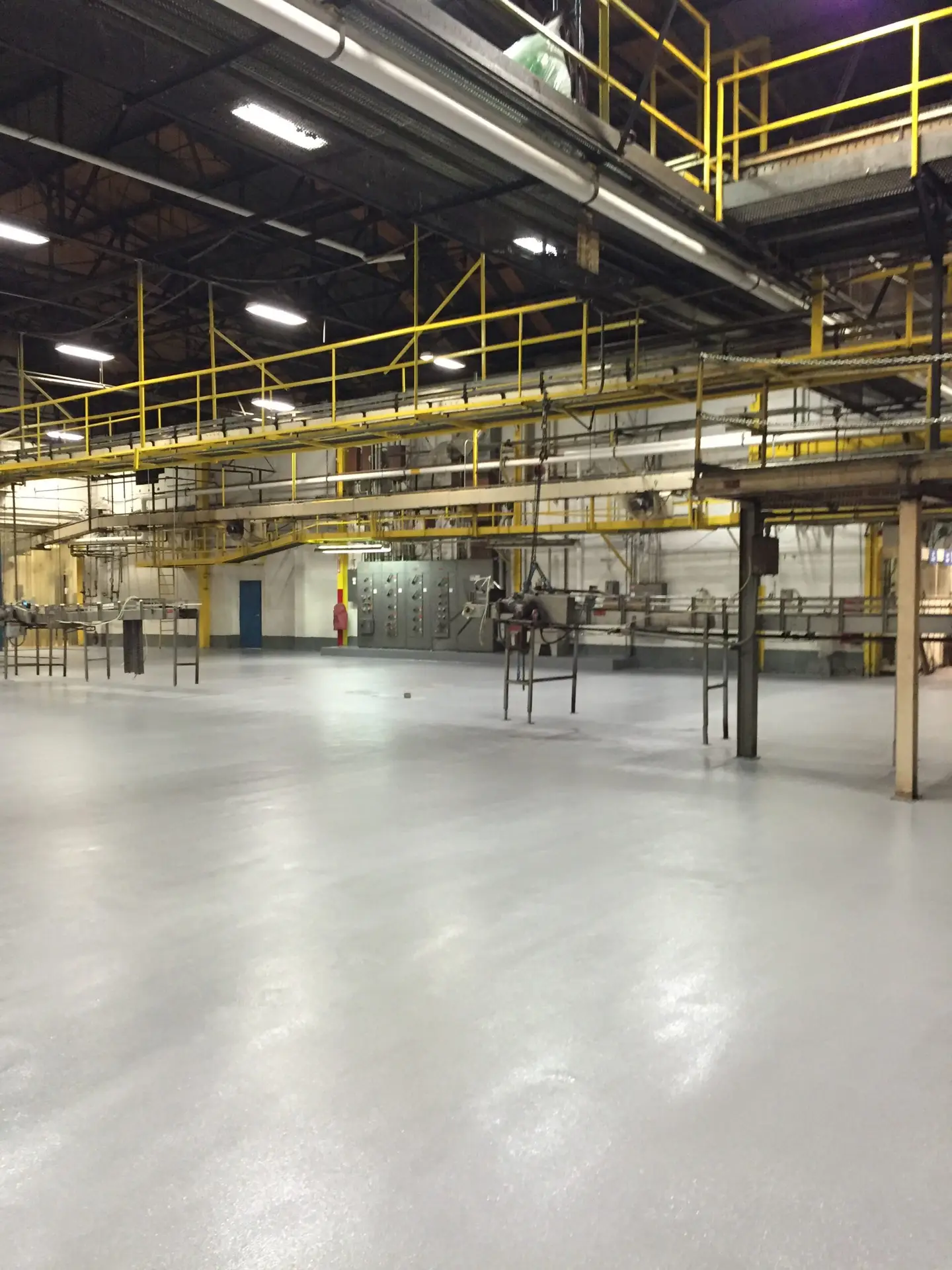
90% of Coating Failures Start with Bad Prep
Every floor coating manufacturer will tell you the same thing: their product performs as specified when installed over a properly prepared substrate. And they are right. The overwhelming majority of coating failures — delamination, blistering, peeling, pinholing — trace directly to inadequate surface preparation. The coating chemistry is sound. The application technique is correct. The substrate was not ready.
At Maverick Performance Solutions, surface preparation is not a line item we minimize to win bids. It is the most critical phase of every installation, and we invest the time, equipment, and testing to get it right. Here is what proper preparation actually requires.
ICRI Concrete Surface Profile (CSP) Standards
The International Concrete Repair Institute (ICRI) defines nine standard Concrete Surface Profiles (CSP 1 through CSP 9) that describe the roughness and texture of a concrete surface after preparation. Each coating system requires a specific CSP range for proper mechanical bond.
CSP 1-2: Acid Etching and Light Grinding
Produces a fine, sandpaper-like texture. Suitable for thin-film sealers, densifiers, and stains. Achieved through acid etching (phosphoric or citric acid) or light diamond grinding. Not aggressive enough for epoxy or urethane systems in most cases.
CSP 3-4: Shot Blasting and Medium Grinding
The standard preparation range for most high-performance coating systems. Produces visible aggregate exposure and consistent surface roughness. Shot blasting is the preferred method — it removes surface contamination, exposes fresh concrete, and creates mechanical profile in a single pass. Diamond grinding with 16-30 grit tooling achieves similar results with more precise depth control.
CSP 5-7: Scarifying and Heavy Milling
Required for thick-build systems like urethane mortar (3/16″ to 1/4″ thickness) and for removing existing failed coatings. Scarifying equipment uses rotating drum-mounted cutters that physically remove concrete surface material. Creates aggressive mechanical profile but requires skill to avoid damaging the substrate.
Equipment Selection by Application
Shot Blasters
Blastrac, SASE, or National Flooring Equipment shot blasters propel steel shot at the concrete surface at high velocity, simultaneously removing surface contamination and creating mechanical profile. Advantages:
- Dust-free operation with integrated vacuum recovery
- Consistent profile across large areas
- Removes paint, thin coatings, and surface contamination
- Production rates: 2,000-4,000 SF/hour depending on machine size
Diamond Grinders
Planetary grinders with diamond-segment tooling provide precise material removal and surface smoothing. Used for leveling, removing thick coatings, and achieving fine surface profiles. HTC, Husqvarna, and Lavina are industry-standard machines. Multi-step grinding with progressively finer diamonds (16 grit through 100 grit) produces polish-ready surfaces.
Scarifiers
Drum-style scarifiers with tungsten carbide or milled-tooth cutters aggressively remove concrete surface material. Used for removing thick elastomeric coatings, leveling uneven joints, and creating CSP 5+ profiles for urethane mortar installations. Von Arx and Bartell machines are common in commercial applications.
Contamination Testing and Removal
Surface contamination from oil, grease, curing compounds, and previous coatings prevents adhesion regardless of mechanical profile. Testing is not optional:
- Water drop test: Drop water on prepared surface — immediate absorption indicates clean concrete. Beading indicates contamination.
- pH testing: Surface pH above 9 indicates alkaline contamination from moisture drive or curing compounds.
- Oil contamination: Dark staining after shot blasting indicates oil penetration. Multiple passes with degreaser and additional shot blasting required.
- Curing compound residue: Many concrete curing compounds leave a membrane that prevents coating adhesion. Shot blasting typically removes surface membrane, but penetrating curing compounds may require deeper removal.
Moisture Testing Before Coating
Every substrate assessment includes quantitative moisture testing. ASTM F2170 (in-situ relative humidity probes) and ASTM F1869 (calcium chloride test) provide the data needed to determine if moisture mitigation is required before coating application. Thresholds vary by coating system — most epoxies require RH ≤75%, while urethane mortar systems tolerate up to 99% RH.
The Prep Determines the Result
There are no shortcuts to surface preparation. The equipment cost, labor time, and testing protocols are investments in coating longevity — not overhead to be minimized. A properly prepared substrate gives every coating system its best chance of reaching full design life.
Contact Maverick Performance Solutions for a site assessment that includes substrate evaluation and preparation recommendations for your facility.